

 Blog
Blog
08 Oct 2026
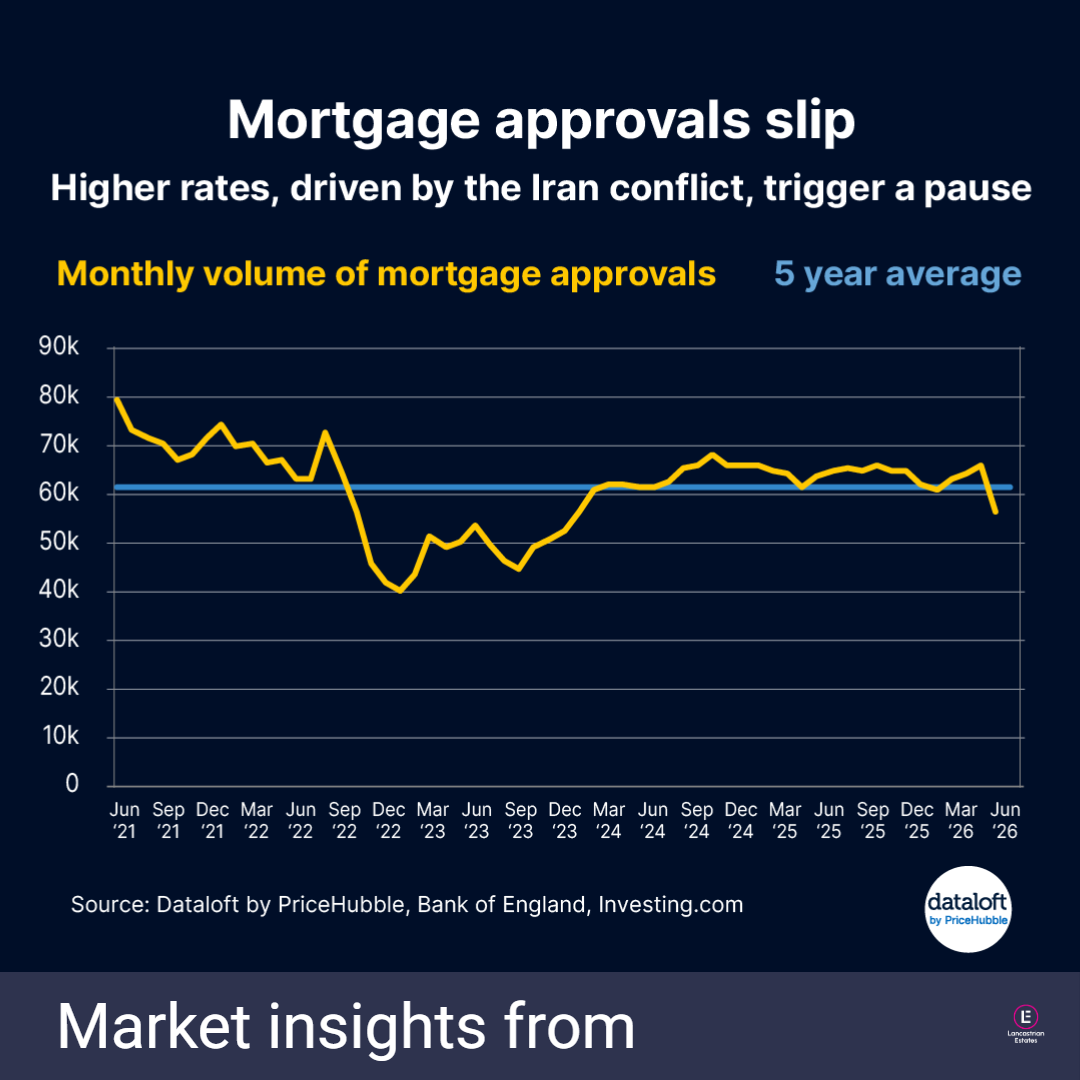
Mortgage approvals had proved remarkably resilient through early 2026. That resilience cracked a little in May: approvals fell 15% month-on-month and sat 8% below their five-year average.
The culprit is swap rates, not underlying weakening demand. The Iran conflict has stoked fears of imported inflation, pushing up swap rates – the benchmark off which fixed mortgage pricing is set.
Swap rates peaked at 4.7% in mid-May, up from 3.8% before the conflict began (based on average weekly rates).
While a peace deal hangs in the balance, evidence from early July shows that as talks progressed then the swap rate quickly eased (lowering to 4.4% in early July).
Full normalisation will take longer than that: markets need certainty that a peace deal holds, and the backlog of tankers queuing at the Strait of Hormuz needs to clear.
This looks like a geopolitical shock, rather than signalling an underlying housing demand problem. This means approvals should pick up again alongside sustained improvement in the swap rate.
Source: Dataloft by PriceHubble, Bank of England, Investing.com
 Blog
Blog
 Blog
Blog